
San Francisco is at a tipping level. The revolts of the previous should present us the trail ahead.
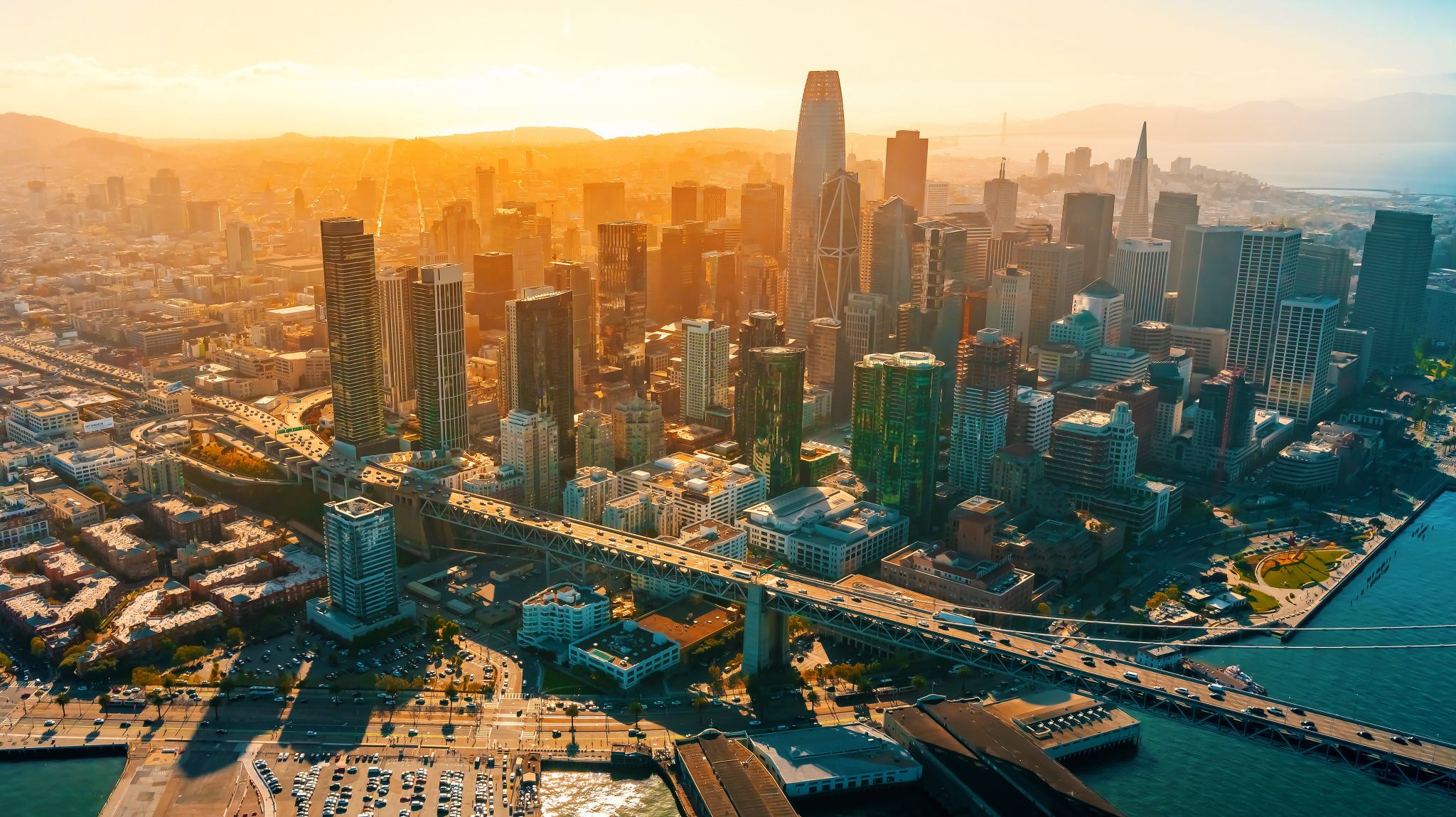
A city with so many hills struggled with its long-term vision. Every view has the power to narrow or broaden our view of the city. It all depends on your point of view.
If you saw the city behind the windshield of a car in 1948, the vision of the future was a vision of elevated highways and fast arrival. At that time, the aptly named “Comprehensive Trafficways Plan” proposed adding a tangle of freeways to San Francisco. Highways proponents saw the ever-increasing presence of the “cement octopus” as inevitable, a concrete solution that would get motorists to their destination with the ease and immediacy that modern life demands. These enthusiasts believed that their desire to arrive now would benefit the communities below the freeway by diverting traffic (i.e., themselves) away from the surrounding streets.
However, in the 1960s and again in the 1990s, proponents of the “now” stopped. The Gum Tree Girls, whose fight to protect Glen Canyon went so far that they threatened to handcuff their children to the trees that stood in the way of the proposed highway, were some of the first to successfully argue that the future of “Right here” is more important than the urgency of “now”.
Much has been said about the Freeway Revolts, but the line between this series of events, which spanned 50 years from 1948 to 1998, is the struggle of ordinary people against the urgency of the present for the quality of life of the future.
Glen Canyon or the Panhandle, which is criss-crossed by highways, can hardly be imagined as the heirs of the future for which these insurgents fought, but this reality was only averted by a series of wafer-thin 6-5 votes on the board of directors. Modern politics is uniquely prone to the charm of the “present” as power rests on yesterday’s issues and alliances and long-term plans rarely fit into electoral cycles. Still, one can easily wonder how nearly half of the city’s overseers could ever be in favor of replacing the Panhandle with a freeway or rebuilding the Embarcadero Freeway that separated the city from its waterfront. Still, it took a coalition of 77 organizations, 20,000 letters, and numerous editorials to convince our leaders that the San Francisco we are enjoying today was worth saving this beautiful green space at the end of Golden Gate Park.
Now a new attempt is underway to separate the San Franciscans from their parks and the waterfront. The siren chant of “right now” calls upon those looking to take a few minutes off the commute, sincere in their desire to please their loudest voters and the dangers of prioritizing today’s convenience.
But when the perspective of the city is above a stroller, behind a handlebar or at a café table in a former parking space, the vision for the future of the city is already emerging. COVID has resulted in the biggest street changes in San Francisco in decades as slow streets, shared spaces, and new pedestrian promenades along JFK Drive and the Great Highway have all shown what tomorrow’s streets might look like.
These new public spaces have found their own proponents as neighbors – artists, teachers, parents and small business owners – are discovering the many opportunities our streets offer when cars become visitors and people become guests of honor. In the same spirit as the insurgents of our past, San Franciscans are now forming coalitions, creating art, writing songs, signing petitions, holding rallies, and advocating civil disobedience. They have not yet threatened to tie their children to trees, but if our leaders continue to bow to the pressures of the present, there is no doubt they will.
We are no longer threatened by a sky blocked by concrete roads, but by a sky that is increasingly filled with smoke, smog and weather that intensifies with each season. If we want the next generation of San Franciscans to inherit a healthy planet, not to mention the same parks, burritos, and beautiful October days we enjoy, we need to reduce our emissions to zero before today’s babies celebrate their 30th birthday . Given the task at hand, the effort may be negligible within 49 square miles, but those 49 square miles have an oversized impact. If we create a sustainable urban future here, we can change how others see their cities.
The Embarcadero Freeway, February 1959.
Ken McLaughlin / Hearst Bay Area
Despite our commitment to sustainability and our lip service to being a city that comes first, it is clear that the perspectives of our executives are still largely shaped by the rear wheel.
These leaders often speak of the need for compromise, but when it comes to our roads there are no more compromises that will not endanger future generations. Our only way forward is to create a future in which human mobility is put above car mobility – not just for sustainability reasons, but also for our commercial corridors, our children and our social fabric.
The scale of climate change requires a “spaghetti-on-the-wall” approach to finding solutions, and our streets are the best spaghetti bowl we have. Not only is our road network a network that can easily accommodate the multitude of iterative changes required to create a truly liveable city, but the exhausts of cars and trucks are our greatest source of emissions. It’s a truth no politician wants to acknowledge in the face of mounting pain, but the future of San Francisco is one where it will be harder to drive – yet easier, safer, and more enjoyable to do almost everything else.
I became a father during the pandemic, so my perspective has changed too. Suddenly the future is not in the distance, but sleeps in my arms. That transition got me behind the wheel of a car more than ever, which made it clear how exaggerated the recent traffic collapse stories are. My driving experience has been remarkably average, but the city can often feel treacherous behind a stroller.
The Gum Tree Girls fought to save Glen Canyon from this reality. My daughter will inherit what we fight for.
If history is our guide, we shouldn’t turn to politicians to show the way. They’re usually a lagging indicator of a city determined to protect the wonder that is right here from the insatiability of the “now”. However, the revolt against “now” is already underway, and it is evident that every San Franciscan is giving up something of today in order to create a better tomorrow.
The antidote to urgency is to move slowly. Maybe that’s why some of our Slow Streets have an incredible 90% approval rating. That is why the many mantras of Slow are repeated over and over again. Keep it slow. Go slow yo Slow is forever. The urgency of “now” means that taking slow action is an act of resistance.
We can’t all be heroes of this revolt – who has the time? But every little act counts. Filling out the JFK Drive Future Poll for five minutes counts (only one minute if you use this voter guide). Even the 12 seconds it takes to double-click a pre-filled email counts. Because the rulers often only count the insurgents before they decide on which side.
Rest assured, however, our heroes will show up. The revolt against “now” seeks more Scott Newhalls, the editor of the San Francisco Chronicle, who gave the paper a decidedly anti-freeway stance. They will find it, maybe because it’s good for business or simply because they love to cycle the Great Walkway. The revolt is currently looking for more Sue Biermans, the outspoken superior who convinced her colleagues to save the panhandle. It will find them, perhaps as soon as a manager decides to put tomorrow’s quietest voters – their children – over today’s loudest voters.
If you look at the city from a historical perspective, one day you could sit on a bench in Sue Bierman Park and stare at the Ferry Building from what was once a freeway exit. The view makes it easy to see that while the monuments of speed are temporary, the monuments of slowness are forever.
Luke Spray is a Cole Valley resident and co-host of BFF.fms wake-up show Roll Over Easy on Thursday morning.


